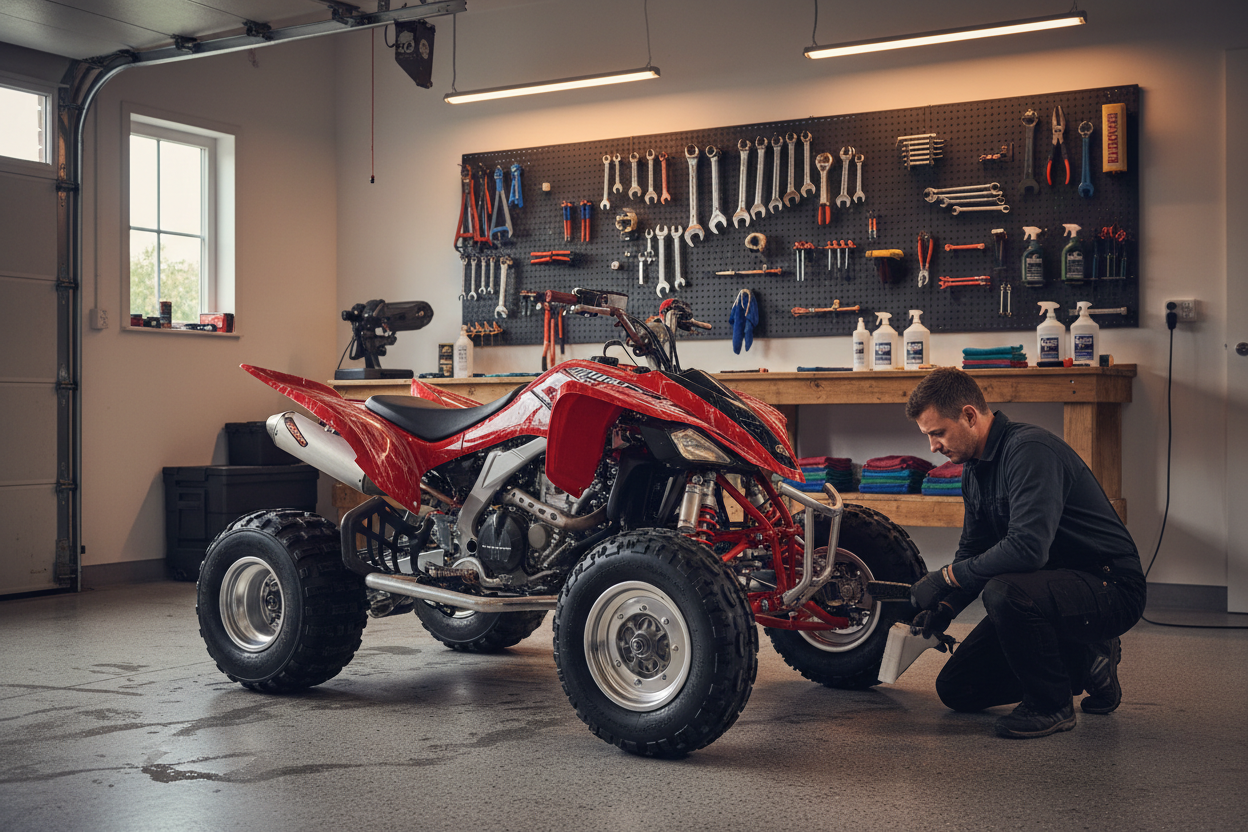
Off-road vehicle cleaning requires a different approach depending on whether you’re washing a dirt bike, ATV, or UTV. They encounter many of the same contaminants, including mud, dust, sand, grease, water, and trail debris. However, that does not mean every off-road vehicle should be cleaned exactly the same way.
Each machine has a different design, mechanical layout, and collection of surfaces. A dirt bike has exposed components and tight spaces. An ATV combines open mechanical areas with larger plastic body panels. A UTV has a much bigger footprint, an enclosed cabin, and numerous interior and exterior surfaces.
Understanding these differences can help you clean more effectively, protect sensitive components, and avoid unnecessary wear. Here is what you should know before washing your dirt bike, ATV, or UTV.
What All Off-Road Vehicles Have in Common
Regardless of what you ride, the basic cleaning process remains similar:
-
Allow the vehicle to cool completely.
-
Remove loose mud and debris with a gentle pre-rinse.
-
Apply an off-road wash solution.
-
Agitate heavily soiled areas when necessary.
-
Use a dedicated degreaser on oily or greasy buildup.
-
Rinse thoroughly without allowing cleaning products to dry.
-
Dry the vehicle and inspect it for remaining dirt.
-
Apply appropriate restoration or protection products.
The biggest differences involve where dirt accumulates, which parts require additional caution, and how much time each vehicle takes to clean.
Cleaning a Dirt Bike

Dirt bikes are relatively small, but they can be surprisingly time-consuming to clean. Their engines, frames, suspension components, chains, spokes, and controls are highly exposed. Mud can work its way into narrow spaces that are difficult to reach with a wash mitt or towel.
Focus on Tight Mechanical Areas
Pay close attention to areas such as:
-
Around the engine and cylinder
-
Behind the front sprocket cover
-
Under the rear fender
-
Around the swingarm and linkage
-
Between spokes and around wheel hubs
-
Near the skid plate
-
Around foot pegs and brake controls
A soft detailing brush can help loosen packed dirt from these areas. For heavier grease and chain-lube residue, use a suitable grease and grime remover rather than relying on excessive pressure or aggressive scrubbing.
Protect Sensitive Components
Avoid directing high-pressure water at wheel bearings, suspension seals, electrical connections, air intakes, exhaust openings, and other sensitive areas. High-pressure water may force moisture or contaminants into components that were not designed to receive a concentrated stream.
Before washing, make sure the airbox is properly sealed and the air filter is correctly installed. Many riders also use an exhaust plug to prevent water from entering the exhaust system.
Be Careful Around the Chain
The drive chain requires special attention. Dirt, sand, and old lubricant can create an abrasive mixture that accelerates wear. Clean the chain with a product and method appropriate for its type, dry it thoroughly, and reapply chain lubricant according to the manufacturer’s recommendations.
Avoid coating the chain, brake rotors, tires, seat, or controls with glossy surface protectants.
Cleaning an ATV

ATVs have more plastic bodywork than most dirt bikes, but they still have exposed suspension, engine, drivetrain, and undercarriage components. Their wider stance also creates additional areas where mud can collect.
Clean Under the Fenders
ATV fenders protect the rider from mud, but the undersides can become heavily packed with dirt. Begin with a thorough pre-rinse to soften and remove buildup before applying soap.
Inspect the following areas carefully:
-
Under all four fenders
-
Around the suspension arms
-
Near the axles and CV boots
-
Around the engine and radiator
-
Underneath the footwells
-
Around the rear differential
-
Across the skid plates and undercarriage
Mud packed around the radiator can interfere with airflow, so this area should be cleaned carefully. Use moderate water pressure and avoid bending delicate radiator fins.
Give Plastic Surfaces Proper Attention
ATVs often contain large areas of textured and smooth plastic. After washing, these surfaces may still appear dull, chalky, or faded, especially if the vehicle is frequently exposed to sunlight.
A non-greasy plastic and trim restorer can help refresh the appearance of these materials. Apply it evenly and avoid surfaces where slipperiness would create a safety concern, such as the seat, foot controls, grips, brake components, or tires.
Inspect the Undercarriage
Because ATVs have more ground clearance and a wider underbody than dirt bikes, mud can remain hidden underneath the machine. Cleaning the skid plates, frame rails, suspension mounting points, and drivetrain areas can make future maintenance and inspections easier.
Cleaning a UTV

UTVs and side-by-sides generally require the most time, water, and cleaning product. They combine exterior bodywork, wheels, suspension, undercarriage components, seats, dashboards, doors, cargo areas, and sometimes windshields, roofs, and enclosed cabins.
A complete UTV wash is closer to cleaning a small off-road vehicle than washing a motorcycle.
Divide the Vehicle Into Sections
Because of its size, it is usually best to clean a UTV in sections:
-
Wheels and tires
-
Front end and suspension
-
Passenger-side bodywork
-
Driver-side bodywork
-
Rear cargo and engine area
-
Undercarriage
-
Interior and cabin
Working in sections helps prevent soap from drying and makes it easier to track which areas have already been cleaned.
Address the Interior Separately
UTV interiors frequently collect dust, mud, spilled drinks, and trail debris. Remove loose debris before applying any liquid cleaner. Compressed air, a soft brush, or a vacuum can help clear dirt from cup holders, seat seams, storage compartments, switches, and dashboard crevices.
Use an appropriate all-purpose surface cleaner on compatible materials such as plastics, vinyl, and other interior surfaces. Spray the product onto a microfiber towel when working around switches, instrument panels, electrical controls, and sensitive electronics.
Use Caution Around Windshields
Many UTV windshields are made from polycarbonate or another plastic material rather than glass. These materials can scratch easily. Avoid household glass cleaners, abrasive towels, stiff brushes, and dry wiping.
Rinse loose dirt away first, use a cleaner that is compatible with the windshield material, and wipe gently with a clean microfiber towel.
Do Not Overlook the Rear and Undercarriage
The rear suspension, engine compartment, wheel wells, skid plates, and undercarriage can hold a significant amount of mud. These areas may require a dedicated degreaser and additional agitation.
Always allow the engine and exhaust components to cool before cleaning. Avoid spraying concentrated water into air intakes, electrical connectors, vents, seals, or exposed mechanical openings.
The Biggest Cleaning Differences
The primary cleaning differences can be summarized simply:
Dirt Bikes Require Precision
Dirt bikes have fewer large panels but more exposed components and tight spaces. Cleaning requires careful attention around the chain, engine, bearings, suspension, spokes, and controls.
ATVs Require Balanced Exterior and Mechanical Cleaning
ATVs combine large plastic surfaces with an exposed drivetrain and undercarriage. Effective cleaning requires attention to both appearance and mechanical areas.
UTVs Require More Time and Surface-Specific Products
UTVs have the most square footage and the widest variety of materials. Their interiors, windshields, body panels, cargo areas, suspension components, and undercarriages often require different tools and cleaning methods.
Should You Use the Same Products on Every Vehicle?
A quality off-road cleaning system can be used across dirt bikes, ATVs, and UTVs, provided each product is compatible with the surface being cleaned and is used as directed.
However, one cleaner should not be expected to perform every task. A complete process may include:
-
A concentrated wash for general exterior cleaning
-
A grease and grime remover for mechanical areas
-
An all-purpose cleaner for interior and specialty surfaces
-
A plastic and trim restorer for faded or dull materials
-
A surface protectant to add gloss and help repel water, mud, and debris
Using purpose-built products allows you to target contamination more effectively without unnecessarily using harsh cleaners across the entire vehicle.
Final Thoughts

Dirt bikes, ATVs, and UTVs may travel through the same trails, but their cleaning requirements are not identical.
A dirt bike demands careful cleaning around exposed components and tight mechanical areas. An ATV requires additional attention beneath its fenders, across its plastics, and throughout its undercarriage. A UTV requires a more organized process that addresses its exterior, interior, windshield, cargo area, and larger drivetrain.
No matter what you ride, the goal is the same: remove dirt safely, preserve the appearance of the vehicle, protect its surfaces, and make post-ride maintenance easier. With the right products, tools, and techniques, you can spend less time fighting dried mud and more time preparing for your next ride.